The 45-year company that has to become two companies.
For forty-five years, Jinsen kept a country's vehicles running. No campaign. No noise. Just parts, on the shelf, found when needed.
That is a kind of trust most companies never earn — the discipline you don't notice until you've worked somewhere without it.
The mark never shouted. It never needed to — the same blue oval, decade after decade, while others came and went.
Jinsen sells to two worlds that no longer want the same thing. The trade buyer wants reliability and a known quantity. The new customer wants a brand they can believe in.
Two brand lives. Same chassis underneath. Two completely different worlds.
One identity cannot face both without diluting itself. Stretch the institution toward the consumer and it loses the trust. Push it the other way and the new audience never arrives.
The first life keeps the mark. Forty-five years of equity do not get thrown away — they get clarified. Same oval, same name, made to read with confidence for the next generation.
The reference is not Tesla. The reference is the Lexus inside Toyota — the same company, made deliberate, made premium, without pretending to be new.
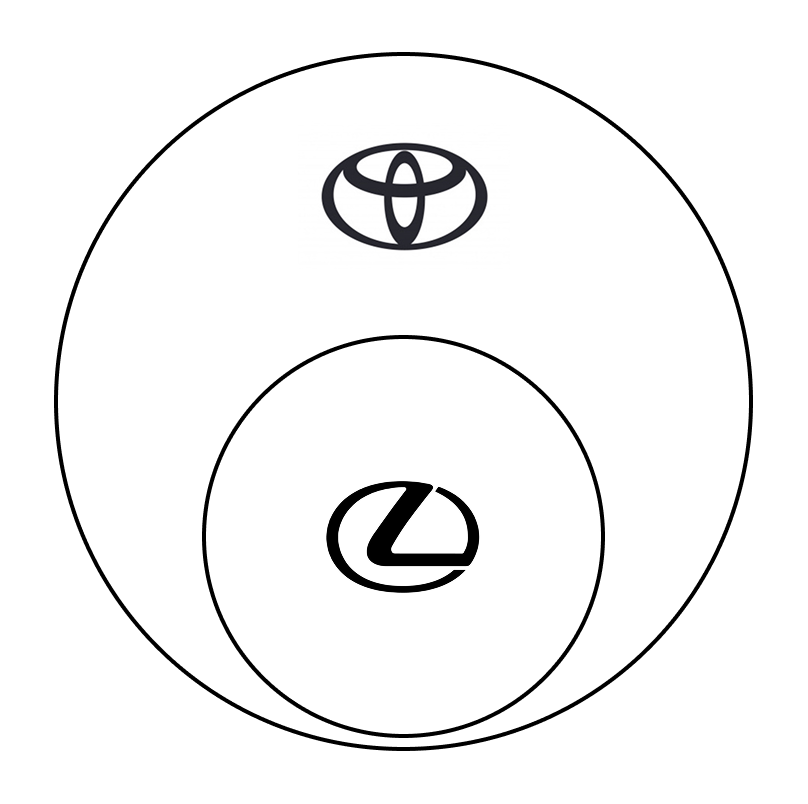
The first life is Jinsen, refreshed — the institution made legible. The second is something it has never been: a brand that faces the customer.
It inherits the chassis — supply, knowledge, forty-five years underneath. Above the line: nothing. No mark, no memory, no expectation to honour.
"Where Jinsen is the institution, this is the storefront. Jinsen carries 45 years of trust. This one, has nothing to lose."
Leads with the forty-five years. The new brand wears its lineage openly — built for customers who want the depth of an institution in a form they can finally buy into directly.
Takes the trade-grade quality Jinsen is known for and points it at the individual. The expertise stays; the gatekeeping disappears. What the professionals used, made available to everyone.
Severs visibly from Jinsen. A brand that shares the chassis but signals nothing of its parent — free to move fast, take risks, and speak in a voice the institution never could.
It is the only direction that uses what Jinsen already has. The heritage is real, the quality is proven — the work is simply to remove the gatekeeping between that expertise and the person who wants it.
It avoids the two traps: it does not lean so hard on heritage that it feels like a museum, and it does not break so cleanly that it throws away the chassis that makes it credible.
In parts, the package is a trust device, not a blank canvas — the mechanic reaches for the box they already know. So the question is not how refined we can make it, but how far we modernise without spending the recognition that makes a part sellable.
Pivot with confidence. 2 in 1.
Two years out, Jinsen is still Jinsen — the same trusted oval, now read by a new generation as deliberate rather than dated. And beside it stands a second brand that could only have come from a company with this much underneath it.
This is Jinsen learning to be two things, deliberately, so it can be both for the next 45 years.